 Rehome Pets
Why use an app instead of a classified listing
Most people who need to rehome a pet start on Craigslist, Facebook Marketplace, or a local Facebook group. Those reach a lot of people quickly, and that is exactly the problem: they reach everyone, with no account history, no structure to the conversation, and no record of what was agreed.
A dedicated rehoming app narrows the audience to people who opened an app specifically to adopt an animal, and gives the conversation a shape:
- Enquiries come from registered accounts, not anonymous replies to a public post.
- Your contact details stay private until you decide to share them. Messaging happens in the app, so you can stop talking to someone without them having your phone number or address.
- Applicants answer the same questions, which makes comparing them far easier than re-reading twenty different message threads.
- There is a written agreement at the end, so what you agreed about vet care, return conditions and the animal's known issues is recorded rather than remembered.
- Listings are searchable by species and location, so the right people find your pet instead of your post sinking down a feed after a day.
The one thing no app can do for you. No platform can tell you whether a stranger will be good to your animal. Verification confirms an account is real; it does not confirm someone is kind. The screening in the section below is the part that actually protects your pet, and it is on you.
How rehoming through the app works
1. Build the listing
Add several clear photos, the animal's age, breed or type, sex, neuter and vaccination status, and an honest description of temperament. Say plainly whether the pet is good with children, with dogs, with cats, and whether it has any medical or behavioural issues. Listings that hide problems produce failed adoptions and returned animals, which is worse for your pet than a slower search.
2. Set your location and radius
Adopters search by distance. Start local — being able to meet in person and see where the animal will live is worth more than a larger pool of applicants.
3. Review applications
You receive enquiries and applications rather than raw messages. Read them before replying to anyone; the first person to message is not usually the best home.
4. Talk in the app, then meet in public
Keep the conversation in-app while you ask questions. When you are ready to meet, choose a public place — a park, a vet's car park — and bring someone with you.
5. Home visit, then complete the agreement
See where the animal will actually live before you hand it over. Then complete the rehoming agreement so both sides have a record of the animal's history, what was disclosed, and the commitment to return the pet to you rather than pass it on if the placement does not work.
Include a return clause. The single most useful line in any rehoming agreement is that if the adopter can no longer keep the animal, it comes back to you — it is not sold on, given away, or surrendered. This is what keeps a pet out of the chain of hands that ends in a shelter.
How it compares to the other options
An app is not always the right answer. Here is an honest comparison of the realistic routes for rehoming a pet:
| Route | Cost to you | You choose the home | Main drawback |
|---|---|---|---|
| Rehoming app | Subscription (7-day free trial) | Yes | Slower than a shelter; you do the screening work yourself |
| Friends and family | Free | Yes | Very small pool; awkward if it goes wrong |
| Breed-specific rescue | Usually free, donation asked | No | Only takes that breed; often has a waiting list |
| Shelter surrender | Surrender fee is common | No | You lose all say in the outcome; intake may be capped |
| Craigslist / Facebook | Free | Yes | No account history, no structure, no agreement, highest risk |
If your pet has serious aggression issues, a shelter or a behaviour-focused rescue is the more responsible route — private rehoming of a dog with a bite history transfers real risk to a stranger and, in many places, liability to you. For most other situations, keeping control of who takes your animal is the better outcome.
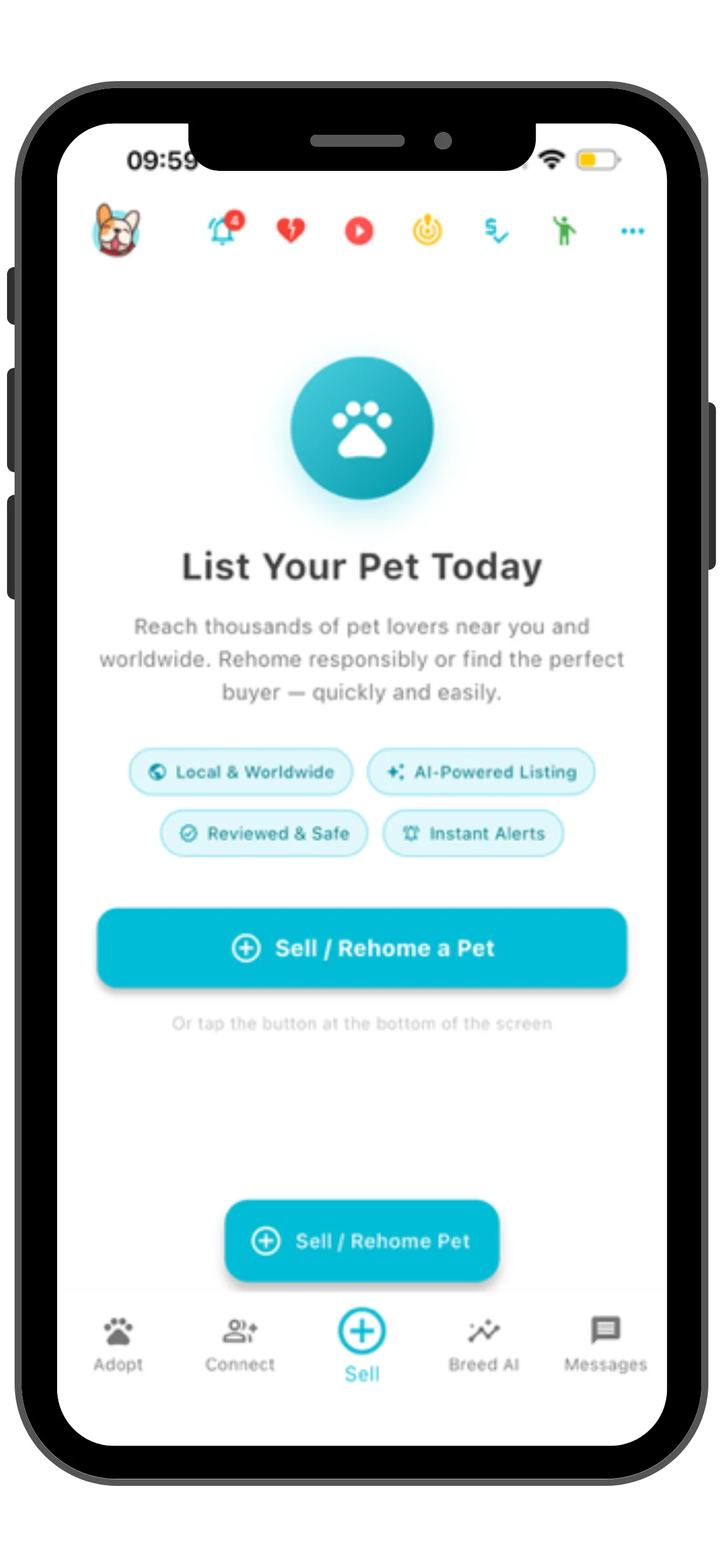
Try the rehoming app
Start a 7-day free trial, list your pet, and choose the home yourself.


7-day free trial, then a paid subscription. Cancel anytime.
What makes a listing get responses
The difference between a listing that gets ignored and one that gets ten enquiries is almost entirely photos and honesty.
- Six to eight photos, taken in daylight. Eyes visible, whole animal in frame, at least one photo of the pet doing something ordinary — lying on the sofa, walking, being held.
- No flash, no filters. Adopters read heavy editing as concealment.
- Write in specifics, not adjectives. "Sleeps through the night in a crate, walks well on lead, barks at the doorbell" tells an adopter far more than "loving and well behaved".
- State the reason you are rehoming. Leaving it out makes people assume the worst. "We are moving to housing that does not allow dogs" is a complete and reassuring answer.
- List the problems. Separation anxiety, resource guarding, a chronic condition, dislike of children. The right adopter will take the animal anyway; the wrong adopter self-selects out, which is what you want.
- Say what you are looking for. "Needs a home with a secure garden and no cats" filters your inbox before it fills up.
Screening adopters properly
Ask every applicant the same questions and write the answers down. These are the ones that actually separate good homes from bad:
- Who else lives in the home, and how old are the children?
- What other animals do you have, and are they neutered and vaccinated?
- Do you own or rent? If you rent, does your agreement allow pets — and can you show that?
- How many hours a day would the animal be alone?
- Which vet practice would you use?
- Have you rehomed or given up a pet before? What happened?
- What would you do if the animal developed a costly health problem?
- What would make you decide you could not keep it?
Warning signs worth walking away over: refusing a home visit, pushing to collect the animal today, wanting it as a surprise gift for someone else, asking about breeding potential, vagueness about where it will live, unwillingness to sign anything, or asking you to hand over an unneutered animal in a hurry. Free-to-good-home listings are specifically targeted by people acquiring animals for resale and for worse. You are allowed to say no without giving a reason.
Ask for a vet reference. If an applicant has had pets before, their vet practice can confirm that those animals were registered and kept up to date. It takes one phone call and it is the single most reliable check available to a private rehomer.
Frequently asked questions
How much does the pet rehoming app cost?
The app starts with a 7-day free trial. Listing a pet for rehoming requires an active trial or a paid subscription, billed through the App Store or Google Play and cancellable from your device at any time. Separately, any rehoming fee shown on a listing is set by the owner of that pet, not by the app — many owners list at no fee at all.
What kinds of pets can I rehome through the app?
Dogs and puppies, cats and kittens, birds, rabbits, reptiles, and small pets such as hamsters, guinea pigs and rats. Each species has its own category so adopters searching for that animal can find your listing.
How long does it take to rehome a pet through an app?
It varies with your location, the animal, and the quality of your listing. Common dog and cat breeds in populated areas usually draw enquiries within a few days. Senior animals, reptiles, and pets with medical or behavioural needs generally take longer and need a wider search radius.
Is rehoming a pet through an app safe?
It is safer than an open classified listing, because enquiries come from registered accounts and conversations stay inside the app until you choose to share contact details. The safety still depends on you screening applicants, meeting in public first, doing a home visit, and using a written rehoming agreement.
Can I use the app to rehome a pet in another city or state?
Yes, you can widen your search radius, but a long-distance rehoming makes it much harder to meet the adopter in person or see where the animal will live. Most responsible rehomings happen within driving distance.
Should I charge a rehoming fee?
A small fee does deter the least serious enquiries, but it is not the safeguard people think it is — anyone acquiring animals for the wrong reasons can pay it. Careful screening, a home visit and a written agreement protect your pet far more than a fee does. See what rehoming costs for the longer discussion.