 Rehome Pets
Rehome your pet safely, to a home you choose
List your dog, cat or any pet once and it reaches people near you — in the Pets Home app on iPhone and Android, and on the web. Chat privately, meet locally, and choose the new home yourself.


4.7 from 5,000+ reviews · 7-day free trial, then a paid subscription (see current prices). Cancel anytime from your phone.
Real listings from the app
How to rehome a pet: the short version
Seven steps that work for a dog, a cat, a rabbit or a parrot. The species guides below go into each one.
- Rule out the fixable problems first. Behaviour, allergies, housing and money issues often have a solution short of rehoming — a trainer, your vet or your landlord may change the picture.
- Get your pet ready. Vaccinations up to date, neutered where appropriate, a recent vet check, and the records in one folder.
- Write an honest listing. Good photos, age, temperament, and the difficult parts too. Every problem you disclose filters out someone who would have handed the animal back.
- Screen everyone the same way. Ask each applicant the same questions and call their vet for a reference on previous animals.
- Meet in public, then visit the home. Take someone with you. Anyone who will not let you see where the pet will live is a no.
- Sign a rehoming agreement. Include what you disclosed, any rehoming fee, and a clause that the pet comes back to you rather than being passed on.
- Hand over and transfer the microchip. Send food, bedding and a favourite toy, and update the microchip registration the same day.
How rehoming works in the app
Three steps, and you keep control of the outcome at every one of them.
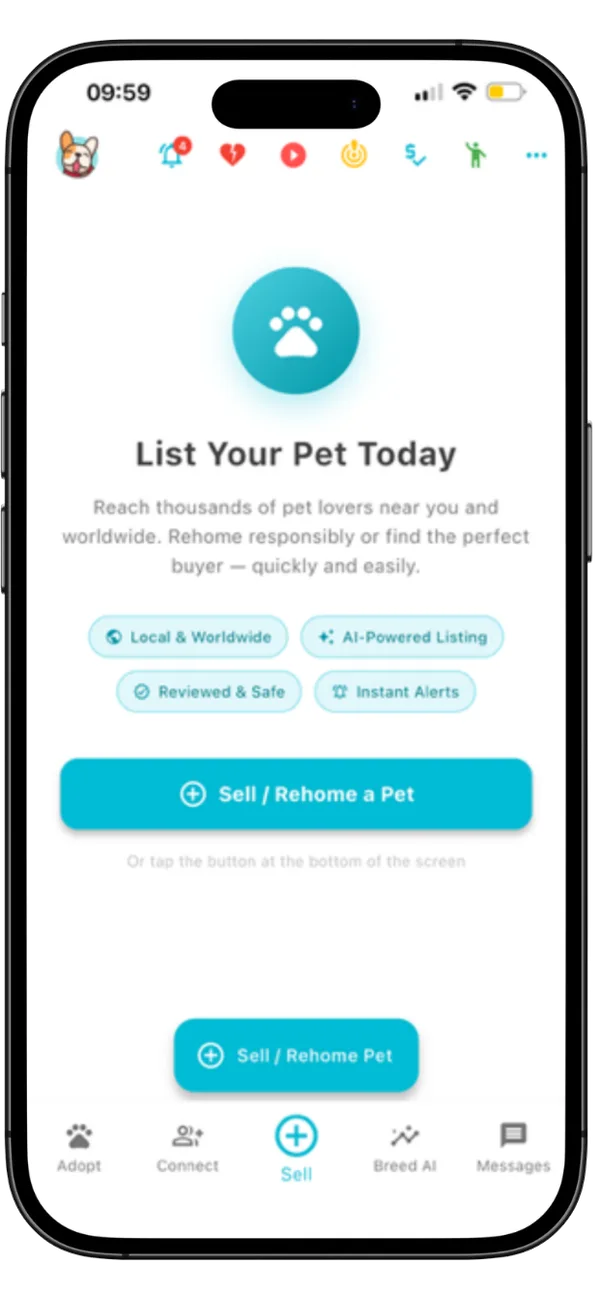
List your pet honestly
Photos, age, breed, temperament — and the difficult parts too. You set the rehoming fee yourself, and plenty of owners set none.
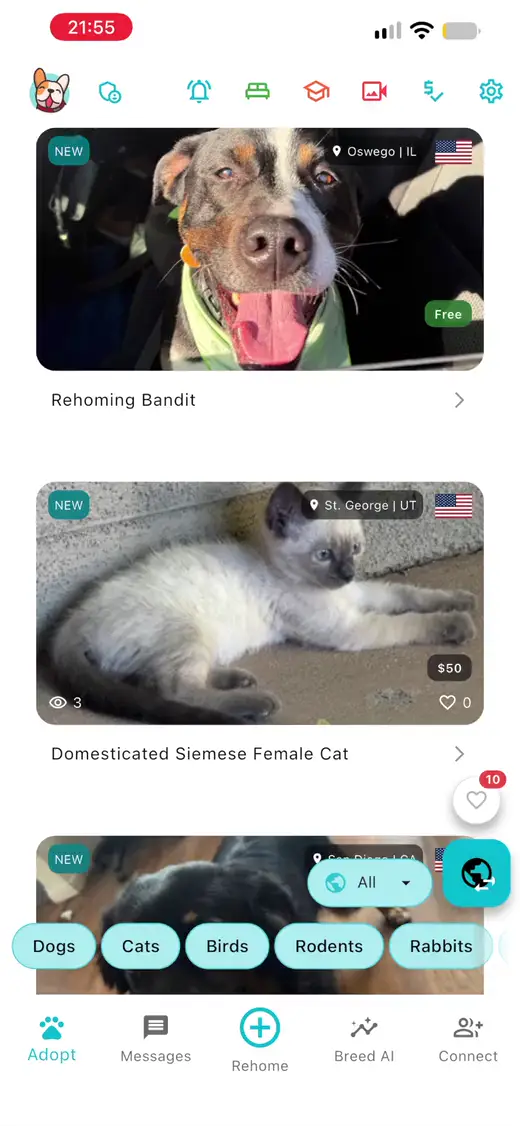
People near you find it
Your listing goes live in the app on iPhone and Android and on the web. People searching within their chosen distance see it first, and message you privately in the app.
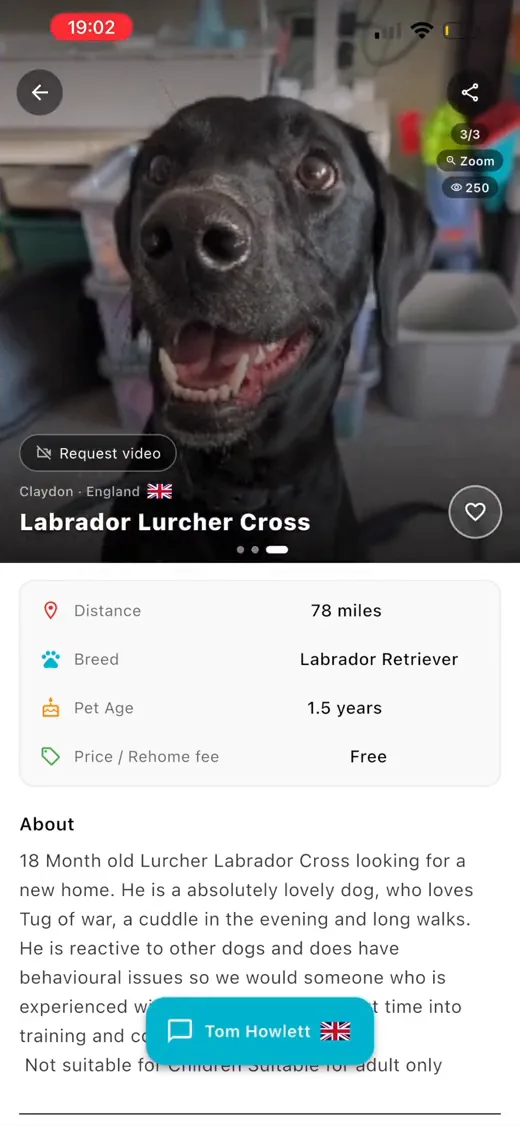
Screen, meet, then agree in writing
Ask every applicant the same questions, take a vet reference, see the home. Then sign a rehoming agreement — including the clause that brings your pet back to you if it does not work out.
Ways to rehome a pet, compared
Every route trades off speed, control and safety differently. What matters most is whether you get to choose — and check — the new home.
| Route | You choose the home | Your details stay private | Best for |
|---|---|---|---|
| Rehoming app | Yes | Yes — in-app chat | Reaching people nearby on iPhone, Android and the web |
| Friends & family | Yes | Yes | When someone you trust is ready |
| Breed-specific rescue | No | Yes | Pedigree breeds; experienced homes waiting |
| Shelter surrender | No | Yes | A last resort; surrender fees are common |
What each route costs is in Is rehoming free?
One listing, seen by people near you
Most pets find their new home within driving distance — close enough to meet, visit the home and stay in touch. Pets Home is built around that.
Local first
People searching near you see your pet first. They choose a radius — 5, 50, 100 miles or more — so your listing reaches the families who can actually come and meet your pet.
On iPhone, Android and the web
Post once in the app and your listing appears in the Pets Home apps on the App Store and Google Play, and on petshome.app, where it can be found by country, region and city.
Private in-app chat
Interested people message you inside the app. Your phone number and address stay yours until you decide to share them, and you can stop a conversation at any time.
Reviewed listings
Listings are reviewed, and every enquiry comes from a registered account rather than an anonymous reply.
AI-assisted listing
Help writing a clear, honest description — the details that matter most to the right home, including health, vaccinations and training.
You choose the home
Say no to anyone, at any point, without a reason. You set the rehoming fee — or none — and you decide who your pet goes to.
Real listings, real homes
Owners write their own descriptions and set their own terms — including whether there is a rehoming fee at all.
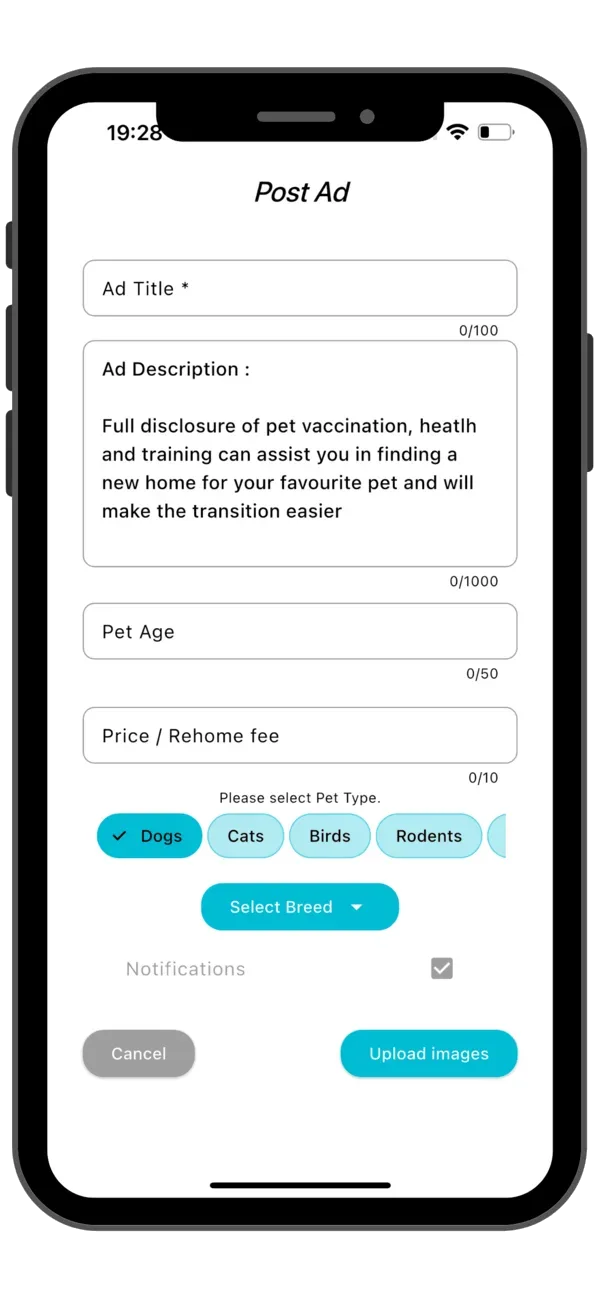
Rehoming guides by pet type
Free, detailed and specific to the animal — what to rule out first, how to screen, and how to hand over without making it worse.
Common questions
How do I rehome my pet safely?
Prepare the animal and its records, write an honest listing that discloses any medical or behavioural issues, ask every applicant the same screening questions, take a vet reference, meet in a public place, visit the home where the animal will live, and complete a written rehoming agreement with a clause requiring the pet to be returned to you rather than passed on.
What is the best way to rehome a pet?
The best route is the one where you choose the new home yourself and can check it first: friends or family you trust, a breed-specific rescue, or a dedicated rehoming app where enquiries come from registered accounts and your contact details stay private. Shelter surrender should be a last resort, because you lose any say in where the animal goes and many shelters charge a surrender fee.
What does the Pets Home app cost?
The app is free to download and browse. To list a pet you start a 7-day free trial of a subscription, which then renews at the plan price unless you cancel, or buy a one-off single listing. Plans are billed by the App Store or Google Play — see current prices. Any rehoming fee shown on a listing is set by the owner, not by the app.
What is a rehoming fee?
An amount the current owner asks the new owner to pay when a pet changes homes. It is optional and set by the owner, usually reflects vet work already done, and is meant to deter impulse enquiries rather than to make a profit. Typical amounts and how to set one.
Which countries can I rehome my pet in?
Pets Home has listings in 30+ countries, including the US, UK, Canada and Australia. You search by distance from your location, so people near you see your pet first. The app is available on iOS and Android.
What pets can I rehome?
Dogs and puppies, cats and kittens, birds, rabbits, reptiles and small pets such as hamsters, guinea pigs and rats. Each species has its own category so people searching for that animal find your listing.
How long does it take to rehome a pet?
Two to four weeks is realistic for a healthy, sociable dog or cat of a common breed in a populated area. Senior animals, large breeds, pets that cannot live with children or other animals, and those with medical or behavioural needs often take two to three months.
Start rehoming your pet
Download Pets Home on iPhone or Android, list your pet, and choose the home yourself.
7-day free trial, then a paid subscription billed by the App Store or Google Play (see current prices). Cancel anytime.